


 English
 Spanish
 French
 German
 Italian
 Chinese (Simplified)
 Japanese
 Korean
 Arabic
 Portuguese
 Send Inquiry
  0804580361308045803613

 Send Inquiry
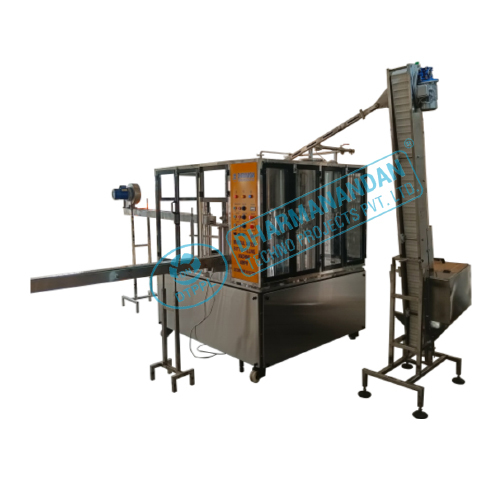
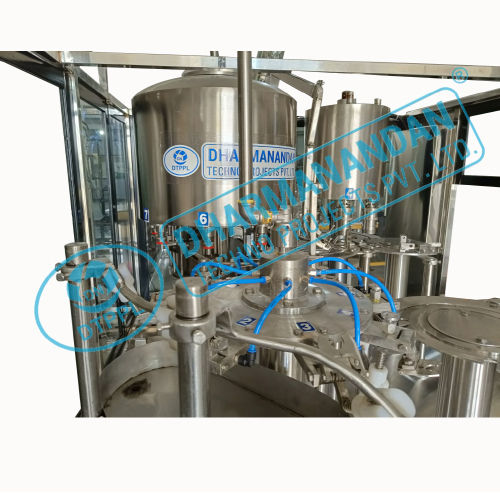
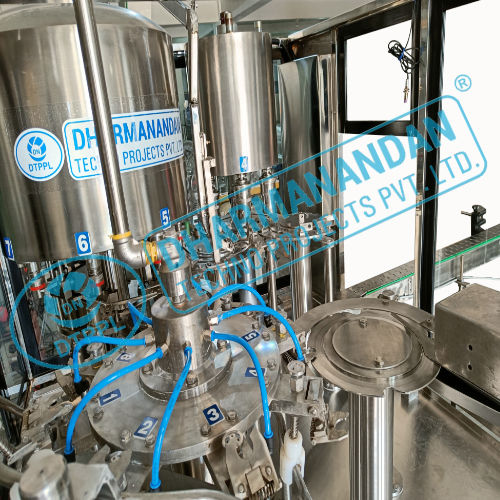
Bottle Rinsing Filling And Capping Machine
Price 750000 INR/ Unit
MOQ : 10 Units
Bottle Rinsing Filling And Capping Machine Specification
- Type
- Automatic Bottle Rinsing Filling and Capping Machine
- Sealing Length
- Customizable as per bottle size
- Power
- 5 kW
- Dimension (L*W*H)
- 3500 mm x 1200 mm x 1800 mm
- Sealing Type
- Automatic Cap Sealing
- Application
- Beverage, Water, Juice Filling
- Weight
- Approx. 3000 kg
- Automation Grade
- Automatic
- Contact Load
- Heavy Duty
- Packaging Material
- Plastic / Glass Bottles
- Voltage
- 220V/380V, 50/60Hz
- Sealing Speed
- Up to 150 bottles per minute
- Accuracy
- 1%
- Driven Type
- Electric
- Condition
- New
- Production Capacity
- 4000-9000 bottles per hour
- Packaging Speed
- 100-150 bottles per minute
- Color
- Stainless Steel Finish
- Seals Type
- Screw Cap / Crown Cap
- Filling Capacity
- 200 ml to 2000 ml
- Rinsing Stations
- 8 to 16
- Capping Heads
- 4 to 8
- Maintenance
- Low Maintenance, Easy Access Design
- Air Consumption
- 600 L/min
- Bottle Diameter Range
- Up to 120 mm
- Material of Construction
- Food Grade Stainless Steel
- Water Consumption
- 0.5-1 m/h
- Noise Level
- <75 dB
- Control System
- PLC Controlled with HMI
- Motor Type
- Three Phase Induction Motor
- Filling Heads
- 8 to 24
- Bottle Type Compatibility
- PET, Glass, HDPE Bottles
- Conveyor Length
- 4 meters
- Safety Features
- Emergency Stop, Safety Guarding
Bottle Rinsing Filling And Capping Machine Trade Information
- Minimum Order Quantity
- 10 Units
- Main Export Market(s)
- Asia, North America, Western Europe, Middle East, Africa
About Bottle Rinsing Filling And Capping Machine
Bottle Rinsing Filling And Capping Machine
Specification
|
DESRCIPTION |
SPECIFICATION |
|
Filling Head |
3 |
|
Washing Head |
2 |
|
Capping Head |
1 |
|
Capacity |
24 & 28 BPM |
|
Filling Range |
200 ml -2000 ml |
|
Cap Feeder |
1800 -2000 Cap holding |
|
Suitable Cap shape |
Plastic screw cap |
|
Air conveyor |
4 feet |
|
Slat Conveyor |
15 feet |
|
Drive Motor Rinsing Pump Cap feeder motor Conveyor geared motor |
1.5 HP, 1440 RPM, 440 VAC 0.5 HP, 220 VAC 0.25HP, 440 VAC 0.25 HP, 32 RPM, 440 VAC |
|
Inspection light |
1 no. |
|
Control Panel |
Electrical with Output of 24VDC for timer and valves |
|
Filling valves |
BSP 24 VDC |
|
Proximity switches |
24 VDC M18 Size (for No Bottle no fill and No Bottle no rinsing system) |
|
Shrink Tunnel |
6KW / 440 VAC |
|
Dimensions W X L X H (Feet) |
5 X 5.5 X 7 |
|
Weight Approx. |
2500kg |
Versatile and Durable Construction
This machine uses food-grade stainless steel throughout its build, ensuring resistance to corrosion and chemical interaction with beverages. Its robust construction supports heavy-duty, continuous use and enables compatibility with bottles made of PET, glass, or HDPE, up to 120 mm in diameter. Its compact design streamlines integration into production lines while maximizing output.
Precision-Controlled Operations
Powered by a PLC-controlled system with user-friendly HMI, the bottle rinsing, filling, and capping machine guarantees accuracy (1%) at every stage. It offers customizable filling volumes (2002000 ml) and sealing lengths, catering to diverse packaging requirements. Multiple filling and capping heads allow for high throughput, reaching up to 9000 bottles per hour.
Operator Safety and Easy Maintenance
Equipped with an emergency stop, safety guarding, and low noise operation (<75 dB), the machine prioritizes worker safety and an optimal plant environment. Maintenance is minimized due to easy-access panels and straightforward mechanisms, reducing downtime while keeping productivity high. The three-phase induction motor assures robust and reliable drive performance.
FAQs of Bottle Rinsing Filling And Capping Machine:
Q: How does the rinsing, filling, and capping process work in this machine?
A: The process begins with the bottles entering the rinsing stations (816), where they are cleaned using controlled water flow. Following rinsing, bottles move to the filling heads (824), where precise volumes (2002000 ml) are automatically filled. Finally, bottles proceed to the capping station (48 heads) for secure application of screw or crown caps, all governed by PLC with user-friendly HMI interfaces.Q: What types and sizes of bottles are compatible with this machine?
A: This machine is versatile, accommodating PET, glass, and HDPE bottles with diameters up to 120 mm. It can handle filling capacities ranging from 200 ml to 2000 ml, making it ideal for various beverage and juice packaging applications involving both plastic and glass bottles.Q: When is periodic maintenance required, and what does it involve?
A: Thanks to its easy-access and low-maintenance design, periodic maintenance is minimal. Routine checks typically involve inspecting rinse and fill heads, ensuring the conveyors smooth operation, and verifying safety features. Maintenance schedules can be set according to production intensity, but the robust design ensures infrequent and simple upkeep.Q: Where can this machine be installed, and what are the space requirements?
A: The machine is suitable for beverage, water, and juice processing facilities, whether newly established plants or as an upgrade to existing lines. With dimensions of 3500 mm (L) x 1200 mm (W) x 1800 mm (H) and a 4-meter-long conveyor, it integrates well into medium to large-scale bottling setups.Q: What are the benefits of using an automatic bottle rinsing, filling, and capping machine?
A: This fully automatic system improves efficiency by speeding up rinsing, filling, and capping operations, achieving up to 150 bottles per minute, reducing manual labor costs, and ensuring consistent product quality. Advanced safety features and low noise levels promote a safer, more comfortable working environment, while the stainless steel build ensures durability and food safety compliance.Q: How precise is the filling operation, and how is it controlled?
A: The filling process offers high accuracy with a deviation of only about 1%, thanks to PLC controls and precision filling mechanisms. Operators can easily monitor and adjust parameters using the HMI, ensuring every bottle receives the exact required volume.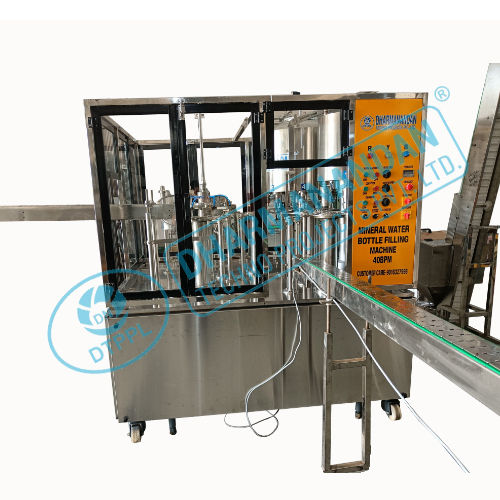
Tell us about your requirement

Price:
Quantity
Select Unit
- 50
- 100
- 200
- 250
- 500
- 1000+
Additional detail
Mobile number
Email

More Products in Capping and Sealing Machines Category
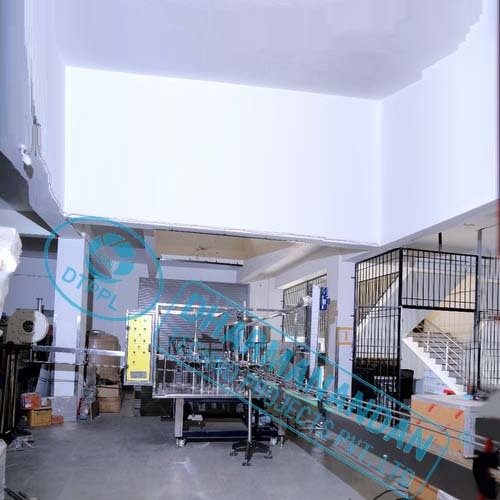
Bottle Sealing Machines
Price 760000.00 INR / Unit
Minimum Order Quantity : 10 Units
Application : Sealing bottles in food, chemical, and pharmaceutical industries
Filling Capacity : 50 ml to 1000 ml bottles
Automation Grade : SemiAutomatic/Automatic
Weight : Approx. 45 kg
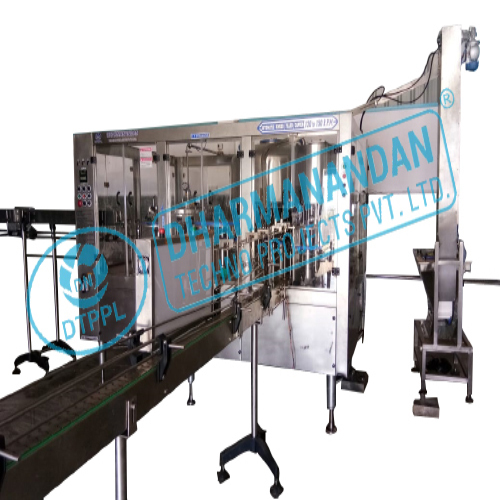
Bottle Capping Machine
Price 750000 INR / Unit
Minimum Order Quantity : 10 Units
Application : Sealing and capping bottles
Filling Capacity : 50 ml to 1000 ml
Automation Grade : Fully Automatic
Weight : Approx. 300 kg
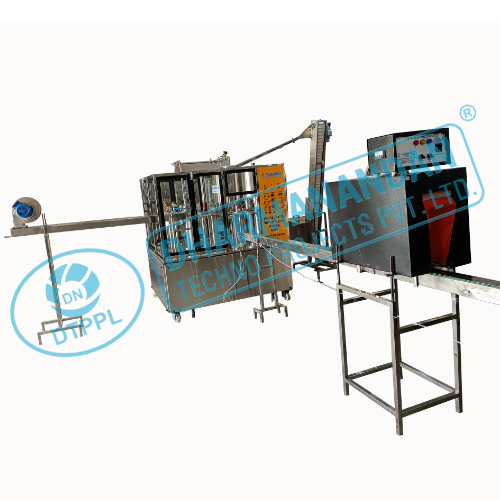
Bottle Filling Capping Machine
Price 750000 INR
Minimum Order Quantity : 10 Units
Application : Bottled liquid product filling and capping
Filling Capacity : 50 ml to 1000 ml
Automation Grade : Automatic
Weight : Approx. 300 kg
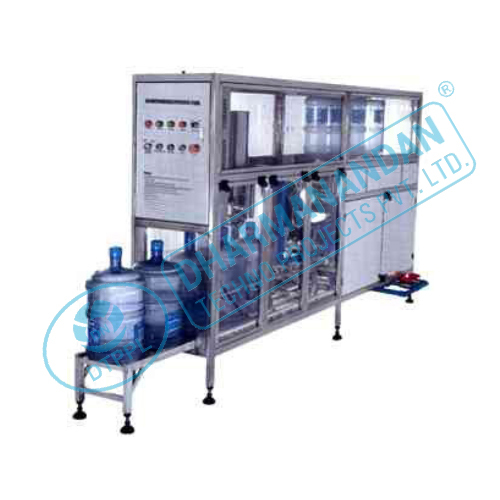
Jar Capping Machine
Price 950000 INR
Minimum Order Quantity : 10 Units
Application : Capping of Plastic/Glass Jars
Filling Capacity : 50 ml to 5 L
Automation Grade : Automatic
Weight : Approximately 150 kg

Contact Details
DHARMANANDAN TECHNO PROJECTS PVT. LTD.
GST : 24AADCD8174E1ZR
GST : 24AADCD8174E1ZR
For any kind of query, contact us with the details below.

- B No.166, NEAR RADHE KRISHNA RESIDENCY, KADODARA ROAD,Surat - 394327, Gujarat, India

- Phone : 08045803613
- Branch Office:
Office No. 12, Building No. A-8, Shanti Vihar CHSL, Opp. Saikrupa Hospital, Mira Road (E), Dist: Thane - 401107, Maharashtra, India

- Mr Ghanshyam B Ramani (Director)
- Mobile :08045803613
- Send Inquiry
 Send Inquiry
 Send Inquiry
  Send SMS
 Call Me Free
|


Leave a message

 |
DHARMANANDAN TECHNO PROJECTS PVT. LTD.
All Rights Reserved.(Terms of Use) Developed and Managed by Infocom Network Private Limited. |
