


 English
 Spanish
 French
 German
 Italian
 Chinese (Simplified)
 Japanese
 Korean
 Arabic
 Portuguese
 Send Inquiry
  0804580361308045803613

 Send Inquiry
RO Water Softening Plant
MOQ : 10 Units
RO Water Softening Plant Specification
- Technology
- Reverse Osmosis + Ion Exchange Softening
- Water Out Conductivity
- <10 S/cm
- Usage & Applications
- Industrial, Commercial, Institutional Water Treatment
- Flow Rate
- Variable, based on model
- Noise Level
- <70 dB
- Pump Type
- High Pressure Multistage
- Power Consumption
- 2-7 kW
- Frequency
- 50/60 Hz
- Feature
- Compact Design, Corrosion Resistant, Low Maintenance
- Ph Level
- 6.5 8.5
- Water in conductivity
- Upto 2000 S/cm
- Efficiency (%)
- >97%
- Recycle Rate
- Up to 80%
- Volume
- Custom as per requirement
- Product Type
- RO Water Softening Plant
- Power Source
- Electric
- Voltage
- 220V / 380V
- Automatic Grade
- Automatic
- Water Source
- Borewell / Municipal / River / Industrial
- Purity Level
- Up to 99%
- Drive Type
- Electric Motor
- Material
- FRP / SS / MS
- Filter Type
- Multi-grade Sand Filter, Activated Carbon Filter
- Capacity
- 500 LPH 50,000 LPH
- Installation Type
- Skid Mounted / Ground Mounted
- Connector Type
- Flanged / Threaded
- Service Support
- 24/7 Technical Support
- Control System
- PLC / Manual Options
- Pretreatment
- Sand Filter, Carbon Filter, Softener
- Inlet Pressure
- 2-4 bar
- Design Life
- 10 Years
- Temperature Range
- 5C 45C
- Cleaning System
- CIP (Clean-in-Place) Provided
- Membrane Type
- Polyamide Spiral Wound
- Color
- Blue / White / Custom
- Discharge Type
- Drain / Reuse
- Salt Rejection Rate
- >99%
RO Water Softening Plant Trade Information
- Minimum Order Quantity
- 10 Units
- Main Export Market(s)
- South America, Middle East, Eastern Europe, Asia, Africa
About RO Water Softening Plant
Water Softening Plant offered by our company, is mainly designed and manufactured by our skilled workers, by making use of high quality raw materials. This plant are widely for softening the hard water and also helps in removing the inside build of minerals in the piper, fixtures, and heaters. Water Softening Plant is simple in operation, highly efficient and compact units. This plant is greatly used to produce the soft water effectively and economically. This plant is available in various sizes, and materials along with other specifications.
Product details
|
Brand |
DTPPL |
|
Capacity (m3 hr) |
2.0,3.0,1.0 |
|
Resin Loading Quantity(kg) |
250 |
|
Power Source |
Electric |
|
Body Material |
FRP |
|
Automation Grade |
Automatic |
Superior Water Purity and Salt Rejection
Utilizing cutting-edge polyamide spiral wound membranes, the system achieves over 99% salt rejection and delivers water with conductivity levels below 10 S/cm. This ensures the final output meets the stringent requirements of industrial and institutional applications, providing peace of mind regarding water purity and quality.
Enhanced Durability and Low Maintenance
Constructed with high-grade FRP, Stainless Steel, or Mild Steel, the plant is built for durability and corrosion resistance. With a comprehensive pretreatment system and a Clean-in-Place (CIP) cleaning mechanism, operational longevity and low ongoing maintenance are assured, resulting in a design life of up to 10 years.
Customizable Design for Versatile Applications
Tailored to handle capacities from 500 LPH to 50,000 LPH, the system supports diverse installation types such as skid-mounted or ground-mounted formats. Options for connector types, color, power supply, and control systems (PLC/manual) ensure compatibility with multiple water sources like borewell, municipal, and river water.
FAQs of RO Water Softening Plant:
Q: How does the RO Water Softening Plant maintain superior water purity?
A: The plant combines Reverse Osmosis and Ion Exchange Softening technologies to achieve a salt rejection rate greater than 99%. Following pretreatment through sand and carbon filters, the polyamide spiral wound membrane delivers output with conductivity less than 10 S/cm, ensuring consistently pure water.Q: What is the usual process flow in this RO Water Softening Plant?
A: Water is first pretreated by multi-grade sand and activated carbon filters, followed by a softener. It then enters the high-pressure pump before passing through the RO membrane. Post-treatment, water is either discharged or reused, while the system is regularly cleaned using an integrated CIP mechanism.Q: When should the plant undergo cleaning or maintenance?
A: The built-in Clean-in-Place (CIP) system allows for periodic membrane and system cleaning based on operating hours, source water quality, and manufacturer recommendations. For optimal performance, routine maintenance checks and CIP cycles are advised as part of preventive maintenance.Q: Where can this water softening plant be installed?
A: The system is suitable for various settings including industrial, commercial, and institutional facilities. It is compatible with water sources such as borewell, municipal supply, river, and industrial water, with installation flexibility for skid-mounted or ground-mounted setups.Q: What are the main usage benefits of this plant?
A: The advanced design offers high efficiency (>97%), water recovery up to 80%, and noise levels below 70 dB. Its compact footprint, customizable capacity, low maintenance, and robust corrosion-resistant materials make it ideal for continuous, reliable water purification and softening.Q: How does the control system enhance operational ease?
A: Operators can choose between a PLC-based automated control system or manual controls, providing flexibility for varying technical skill levels and process integration, ensuring reliable operation and seamless maintenance.Q: What support and service options are provided?
A: Customers receive 24/7 technical support, with prompt assistance for any operational or technical queries. This ensures minimal downtime and maximum system uptime, supporting the plants 10-year design life and reliable water treatment performance.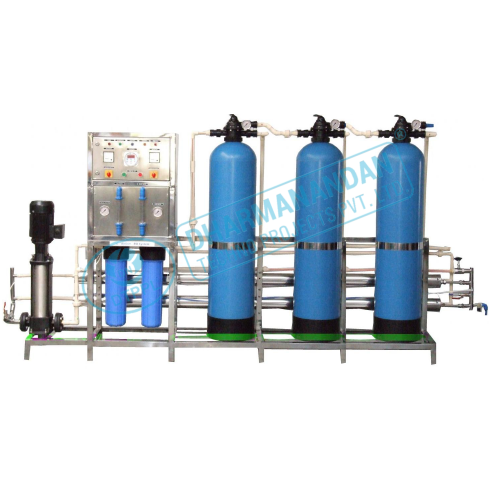
Tell us about your requirement

Price:
Quantity
Select Unit
- 50
- 100
- 200
- 250
- 500
- 1000+
Additional detail
Mobile number
Email

More Products in Water Softening Plant Category
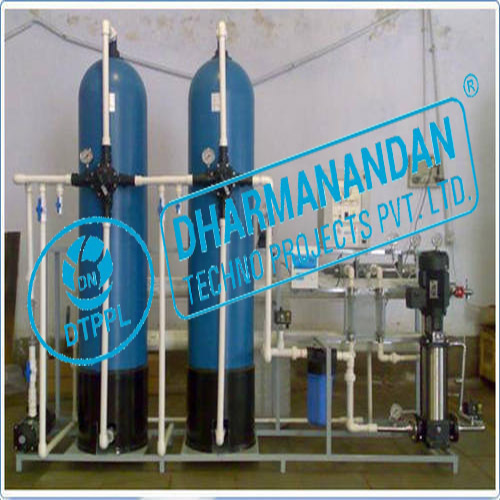
Water Softeners
Price 250000.00 INR / Unit
Minimum Order Quantity : 10 Units
Filter Type : Ion Exchange Resin
Water in conductivity : High
Installation Type : Other , Floor Mounted
Recycle Rate : 75%

Contact Details
DHARMANANDAN TECHNO PROJECTS PVT. LTD.
GST : 24AADCD8174E1ZR
GST : 24AADCD8174E1ZR
For any kind of query, contact us with the details below.

- B No.166, NEAR RADHE KRISHNA RESIDENCY, KADODARA ROAD,Surat - 394327, Gujarat, India

- Phone : 08045803613
- Branch Office:
Office No. 12, Building No. A-8, Shanti Vihar CHSL, Opp. Saikrupa Hospital, Mira Road (E), Dist: Thane - 401107, Maharashtra, India

- Mr Ghanshyam B Ramani (Director)
- Mobile :08045803613
- Send Inquiry
 Send Inquiry
 Send Inquiry
  Send SMS
 Call Me Free
|


Leave a message

 |
DHARMANANDAN TECHNO PROJECTS PVT. LTD.
All Rights Reserved.(Terms of Use) Developed and Managed by Infocom Network Private Limited. |
